
SolaX
Hybrid inverters, modular storage, heat pumps, and the piece most quotes leave out: surplus generation that runs the heating instead of going to the grid.
Solar, storage, heat pump and car in one app • 0% VAT until 31 March 2027 • G98 / G99 handled
Space heating and hot water dwarf everything else a house uses. Exporting surplus generation and buying it back later is the least valuable thing a solar system can do with it; a battery is the usual answer, and running the heating on it is the other one.
R290 is the reason a heat pump can do that at a flow temperature a retrofit radiator circuit will actually accept. It performs well hot, where the older refrigerants do not, and it carries a global warming potential of three against the hundreds or thousands of the fluorinated gases being phased down around it.
It is also propane, so it is flammable, and the siting rules around windows, doors and drains are stricter. That is a survey question, not a reason to avoid it.
Talk to us about heating →Surplus that runs the heating instead of leaving the house

The load worth pointing surplus at
SolaX build two air-to-water ranges on R290 propane, which has a global warming potential of 3 and performs well at high flow temperatures, which is how the range reaches 80 °C for heating and 70 °C for hot water.
The 4–6 kW Alture range suits most British domestic retrofits, where a properly calculated heat loss rarely reaches eight kilowatts. Which size you need comes from that calculation, not from the floor area and not from the rating of the boiler being replaced.
Propane is flammable, so siting rules around windows, doors and drains are stricter. We survey the position properly rather than putting it where the pipework is shortest.
How surplus generation actually reaches the heat pump
The mechanism, rather than the marketing claim.
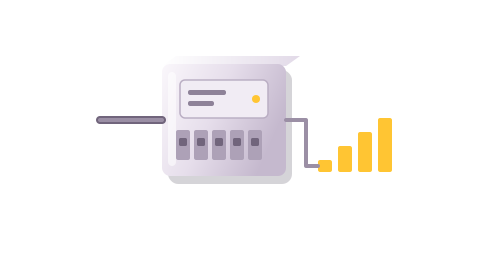
Adapter Box G2: a translator, not a proprietary link
The Adapter Box connects to the inverter over RS485, taking its comms and its 11–15 V supply from the inverter itself. It has four dry-contact outputs and a 0–10 V analogue output, and it can drive a heat pump three ways.
Because it speaks all three, it will drive most modern heat pumps regardless of make. A SolaX inverter can run somebody else’s heat pump, which is the opposite of how these ecosystems usually work.
The three ways it can drive a heat pump
Which one we use depends on what your heat pump will accept.
The simplest, and the most widely supported
One output opens and closes according to whether there is surplus generation. The heat pump sees the standard SG Ready signal and responds with its own logic, usually by raising the target temperature or bringing the cylinder charge forward.
It is coarse, it is understood by almost every modern heat pump, and on a well-insulated house it captures most of what is available.
Four relays, up to eight power levels
Four dry-contact outputs combine to signal up to eight power levels across as many as fifteen steps. The heat pump is told roughly how much surplus there is rather than simply that there is some.
This is the middle option and the one we use most often, because it gets close to proportional control without needing an analogue input on the heat pump.
Proportional, and the finest of the three
A 0–10 V signal steps at roughly ten-second intervals as available power changes, so the heat pump modulates in proportion to real surplus rather than to a handful of bands.
It needs a heat pump with an analogue input, which not all have. Where one is available this is the mode that puts the most surplus into the house.
What the stepping is for
SolaX’s own worked example: a 2000 W heat pump, configured with seven steps, as a kilowatt of surplus appears.
The stepping is deliberate. A heat pump that chased every passing cloud would short-cycle itself to an early grave. There is also a configurable fallback step the system drops to if it loses communication with the inverter, so a comms fault leaves the heating in a sensible state rather than off. Scheduling is done in the SolaX Cloud app, with up to six time periods a day.
The inverter and the storage

Single and three phase
Two maximum power point trackers, backup changeover under ten milliseconds, peak backup output well above the continuous rating for short periods, and PV oversizing allowances up to 200%.
The right model depends on array size, phase arrangement and what your network operator will approve, so we specify it at survey and name the exact model on the quotation rather than quoting a family.

Modular LFP storage
5.8 kWh nominal and 5.5 kWh usable per module at 95% depth of discharge. One to six modules make a cluster from 5.8 up to 34.6 kWh, and up to twelve units can run across dual inverter battery ports for 69.1 kWh.
Maximum charge is 25 A and discharge 35 A per module, so a larger cluster both stores more and moves it faster. A single module against a 6 kWp array will not absorb a good June afternoon.
Heating is built in, which extends the range down to −30 °C when enabled, but it draws power to do it, so a garage usually beats an exposed north wall.
What a cluster actually adds up to
Modules are identical. The capacity is how many of them are in the stack.
The usable figures are at 95% depth of discharge, which is where 5.8 kWh nominal becomes 5.5 kWh you can actually take out. Maximum charge is 25 A and discharge 35 A per module, so a larger cluster both stores more and moves it faster: a single module against a 6 kWp array will not absorb a good June afternoon.
Up to twelve units can run across dual inverter battery ports, for 69.1 kWh, which is more than a domestic property has any use for.
One manufacturer, four loads
Why the single ecosystem argument is real
A house that has electrified properly has four things drawing serious power: the battery, the heating, the car and everything else. Most installations end up with three manufacturers and three apps, none of which knows what the others are doing, and a homeowner who optimises enthusiastically for a month and then stops.
Solar, battery, heat pump control and car charging all report into SolaX Cloud. That is less exciting than the hardware and probably matters more.
The EV charger
Single-phase units from 1.4 to 7.2 kW and three-phase from 1.4 to 22 kW, Type 2, tethered or socketed. It will hold the car to surplus generation rather than pulling from the grid, switches between one and three phases automatically on the three-phase units, and does dynamic load balancing so the supply is not overloaded when the car, the heat pump and the oven all want power at once.
The trade-off, stated plainly
You are tying yourself to one manufacturer’s roadmap. We are happy to mix (a different battery, a different charger) and we will tell you which we would choose and why. But where a household wants the surplus actually used rather than merely measured, one ecosystem does that better than four good products that do not talk.
Where we would not use it
If you already have a heat pump from another manufacturer with its own well-supported controls, the all-SolaX argument weakens and we would say so.
The Adapter Box still earns its place, because it will drive that heat pump, and it is the cheapest part of the system to add.
What a full SolaX system covers
The specification, in full
Guides for your SolaX
Free step-by-step ZenithNord guides to your SolaX inverter, battery and the SolaXCloud app. Read them here, or download a PDF to keep or print.
FAQs
Do I need a SolaX heat pump for the Adapter Box to work? +
No. It controls heat pumps through SG Ready, dry contacts or a 0–10 V analogue signal, which covers most modern heat pumps regardless of make. SolaX do make their own, and they integrate cleanly, but they are not a requirement.
How quickly does the heat pump respond to surplus? +
It steps rather than jumps. SolaX's own worked example has a 2 kW heat pump reaching half output in roughly forty seconds when a kilowatt of surplus appears. The stepping stops it short-cycling every time a cloud passes.
What happens if the Adapter Box loses communication with the inverter? +
There is a configurable fallback step it drops to, so the heating stays in a sensible state rather than switching off. We set that at commissioning and tell you what it is.
Will the heat pump keep running in a power cut? +
We do not claim that. SolaX publish no statement on heat pump operation from the backup supply, and a heat pump is a large load to put on a battery during an outage.
Can I add battery capacity later? +
Yes. Triple Power is modular, so modules are added to the cluster. Tell us at survey if you expect to, because it affects siting and the inverter specification.
Can the battery really go outside? +
IP66 and, with its heating element enabled, an operating range down to −30 °C. So yes, but the heating draws power to achieve that, and a garage usually gives better real-world performance than an exposed wall.
What refrigerant do the heat pumps use? +
R290, which is propane, with a global warming potential of 3. It performs well at high flow temperatures. It is flammable, so siting rules around windows, doors and drains are stricter and we survey the position properly.
Which heat pump size will I need? +
That comes from a calculated heat loss for the property, not from its floor area or its current boiler. Most British domestic retrofits land between 4 and 8 kW.
Is one manufacturer for everything a good idea? +
It makes the system simpler to run and better at using surplus. The trade-off is being tied to one manufacturer's roadmap. We are happy to mix, and we will say which components we would choose and why.
Which inverter model will you quote? +
That depends on the array, the phase arrangement and what your network operator approves. We name the exact model on the quotation and confirm current UK availability with SolaX before we do.
Ask us how much of your surplus could run the heating
Tell us what heating the house has, or is likely to have, along with your annual kWh figure and tariff, and we will show you where the surplus would actually go.
