
SolarEdge
Per-panel optimisation, DC-coupled storage, whole-house backup, and a controller that puts your surplus into the hot water cylinder instead of the grid.
SolarEdge Certified Installer • 0% VAT until 31 March 2027 • G98 / G99 handled
The problem optimisers solve
A string is only as good as its worst panel
On a conventional string the modules are wired in series, so the current is the same everywhere in the string. If one module is producing less than its neighbours it does not simply contribute less. It holds the whole string back, because the string cannot carry more current than its weakest member will pass.
A SolarEdge optimiser is a small DC-DC converter behind each module. Each one finds the maximum power point for its own panel and converts that panel’s output to whatever the string needs. The shaded module produces what it can; the rest carry on at full output.
One chimney, two outcomes
The same roof at the same moment. Drag the handle across.
The weakest panel costs you the weakest panel, and nothing more. On a roof with any complication at all that is worth real money every year.
It is not only shade
Mismatch has several causes and a plain string pays for all of them together.
Shade is the obvious cause and in this part of the country there is plenty of it: chimneys, dormers, aerials, satellite dishes, the neighbour’s conifer, a flue that was not there when the array was designed.
But it is not the only cause. Modules from the same pallet are not identical: manufacturing tolerance alone puts a spread across them. They soil at different rates depending on pitch and position. They age at different rates. A bird’s nest under one panel, a cracked cell, a slightly warmer module in the middle of the array where the air does not move, all of it shows up as mismatch, and on a plain string all of it is paid for by the whole array.
The figures above are indicative rather than a promise about your roof. What they are there to show is that the losses stack, and that only the last of them is the one everybody talks about.
What optimisers let you design that you otherwise could not
Mixed orientations on one string
Because each module is independent, panels on different faces can share a string. A main south pitch, an east-facing return over the kitchen and a handful on the garage can be one electrical circuit rather than three, and the faces do not need equal numbers of panels.
On a plain string system, mixed orientations mean separate strings and separate trackers, or, more commonly, a design that quietly drops the awkward faces and fits fewer panels. Optimisers are frequently what turns a 3.5 kWp compromise into a 5.5 kWp array on the same roof.
Per-panel monitoring, and why it matters at year seven
Every module reports individually. On day one that is a novelty; most people watch it constantly for a month and rarely afterwards.
Its value arrives years later. When output drifts down on a conventional system you have a number that looks slightly low and no way to tell whether it is weather, soiling, a failing module or an inverter on its way out. Diagnosis means a visit, a scaffold and elimination. With per-panel data a single underperforming module is visible as a single underperforming module, identified by position, before anyone climbs anything.
Safety on the roof
A string of modules in sunlight produces a high DC voltage whether or not the inverter is running: a hazard for anyone working on the roof and for the fire service. With module-level electronics the string voltage collapses to a safe level when the inverter stops, because each optimiser stops converting.
When we would not specify optimisers
Optimisers cost more and they put electronics on the roof behind every panel. On a clean, unshaded, single-orientation roof a good string inverter will produce nearly the same energy for less money, with fewer components in a difficult place to reach.
We will tell you that if it is true of your roof. The case for optimisers is strongest where there is shading, more than one orientation, soiling, a long expected ownership, or where per-panel monitoring genuinely matters to you, and weakest on a simple south-facing slope with nothing near it.
The inverter and the storage
Which battery goes with which inverter, and why the warranties differ.
The centre of the system
Single-phase models from 2.5 kW to 10 kW, including the 3.68 kW unit that sits inside the G98 limit. Maximum DC input is twice the AC rating, so a 5 kW unit takes a 10 kW array: generous oversizing, which is the right approach at this latitude.
It takes the optimised string, runs the battery on DC and handles backup where a Backup Interface is fitted. Backup output is 6 kW up to the SE6000H and 10 kW on the SE8000H and SE10000H.
DC-coupled storage
9.7 kWh usable per unit and up to three per inverter, for 29.1 kWh. Continuous 5 kW with 7.5 kW peak for ten seconds, and peak round-trip efficiency of 94.5%.
It is DC-coupled to the Home Hub rather than sitting alongside with its own electronics, which is where that efficiency comes from. The warranty asks that it spends 95% of the period between 0 and 40 °C: a real constraint on outdoor siting in this country, and worth reading before anyone promises you a north-facing wall.
Which battery goes with which inverter
The pairing is not a preference. It is what SolarEdge list.
| Home Battery 400V | Home Battery 48V | |
|---|---|---|
| Inverter family | Single-phase Home Hub | Three-phase |
| Module / unit | 9.7 kWh usable | 4.6 kWh a module |
| Maximum per inverter | 3 units: 29.1 kWh | 5 modules: 23 kWh |
| Continuous power | 5 kW, 7.5 kW peak for 10 s | Per inverter rating |
| Round trip | 94.5% peak | >94.5% |
| Ingress rating | IP55 | IP65 |
| Unit weight | 119 kg | 54.7 kg a module |
| Warranty | 10 years | 10 years |
The low-voltage battery, and one caution
The 48V battery is the modular option and the one SolarEdge list against their three-phase inverters. Modules are 4.6 kWh, up to five per inverter for 23 kWh, at 54.7 kg each and IP65, with round-trip efficiency above 94.5%.
There is a newer 48V variant with different figures, 4.85 kWh per module and a lower maximum count, whose own datasheet says it is approved for Austria, Germany and Poland only. We specify from the datasheet that applies to the UK and name the part on the quotation, because the two are easy to confuse in a price list.
Where a summer afternoon actually goes
The gap between the two lines is the part most systems export for a few pence and buy back that evening at several times the price.
The cheapest useful thing on most quotes
Surplus into the cylinder, not onto the grid
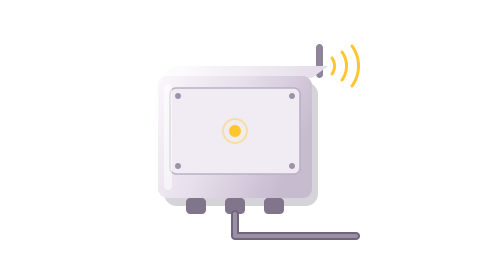
The first thing to be clear about is what it is not. It is not a cylinder and it is not an immersion heater. It is a controller that modulates power into the immersion element you already have.
Water heating is one of the larger loads in most houses, it is entirely flexible about when it happens, and a cylinder is a rather good thermal battery you have already paid for. Diverting a summer afternoon’s surplus into it is worth considerably more than exporting the same energy.
The catch, and we would rather say it here than at survey: it needs a SolarEdge inverter to talk to. Home Hub, Home Wave and Short String inverters, and the SE16K and SE17K three-phase units. It is not a universal diverter, and if you have somebody else’s inverter we will point you at a different answer rather than sell you this one.
Backup, and what it takes
A battery does not island the house on its own
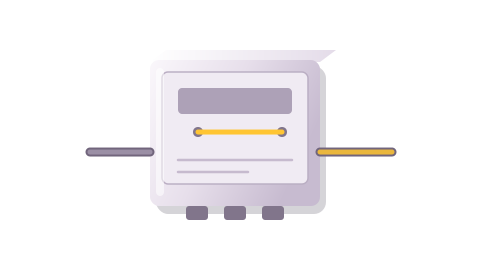
Grid-tied systems must disconnect when the supply fails, because nothing may energise a network someone may be working on. Backup therefore needs a device that physically separates the house from the incoming supply before the inverter is allowed to carry the load.
The inverters deliver 6 kW of backup power up to the SE6000H and 10 kW above it. That is a real constraint: an electric shower alone can exceed it. We would normally protect lighting, sockets, the boiler or heat pump controls, the router and the kitchen, and leave the heavy loads outside the protected side.
It is not an uninterruptible supply. There is a changeover, and sensitive equipment still wants its own UPS behind it. We will tell you that rather than let you find out.
Putting a SolarEdge system together
Survey and shading assessment
The case for optimisers is made or lost here. We look at what shades the roof and when, how many orientations a sensible array would use, and what the array looks like both with and without module-level electronics.
Sizing against consumption, not roof area
We want your annual kWh figure and ideally half-hourly smart meter data. Battery capacity is a question about your evenings; array size is a question about your roof and your total consumption.
Serial numbers mapped to positions
Optimiser serial numbers are mapped to physical positions on the roof as we fit them. That is what makes the per-panel monitoring useful later, rather than a screen full of anonymous numbers.
The pack you keep
MCS certificate, DNO paperwork, electrical certification, the layout map showing which optimiser is which panel, and the warranty registrations. We set the monitoring up with you rather than emailing a link.
The specification, in full
FAQs
Are optimisers worth it if my roof is not shaded? +
Less obviously so, and we will tell you if a plain string is better value. The case is strongest where there is shading, more than one roof orientation, soiling, a long expected ownership, or where per-panel monitoring genuinely matters to you.
Do optimisers have their own warranty? +
Yes, 25 years, against the inverter's 12 as standard. The optimisers are the part fixed to the roof; the inverter is the part at ground level that can be swapped in an hour.
Does an optimiser on every panel mean more to go wrong? +
More components, yes. They are IP68, rated −40 °C to 85 °C and warranted for 25 years, and failures are rare. It is still a fair question, and it is the main argument for a plain string on a simple roof.
Can I mix panel orientations on one string? +
That is one of the main reasons to use optimisers. Each module tracks independently, so faces can share a string and do not need equal numbers of panels.
What does the Home Hot Water Controller actually do? +
It watches for surplus generation and modulates power into your existing immersion heater rather than letting that surplus go to the grid. It does not replace the cylinder or the element, and it needs a SolarEdge inverter to talk to.
Will the hot water controller work with my existing inverter? +
Only if that inverter is a SolarEdge Home Hub, Home Wave or Short String unit, or an SE16K or SE17K three phase. It is not a universal diverter.
Can I have a SolarEdge inverter with a different make of battery? +
Sometimes, but the compatible list is shorter than people expect. BYD's HVS and HVM towers are not listed with SolarEdge inverters, though the low-voltage LVS range is. We check against the manufacturer's current list before quoting.
Which battery goes with which inverter? +
SolarEdge pair the Home Battery 400V with single-phase inverters and the Home Battery 48V with three phase. The 400V is 9.7 kWh a unit, up to three per inverter; the 48V is modular at 4.6 kWh a module.
Will it keep the house running in a power cut? +
Only with a Home Backup Interface, and only for the circuits on the protected side, within the inverter's backup rating of 6 or 10 kW.
Is per-panel monitoring something I will actually use? +
Most people look at it constantly for a month and then rarely. Its real value is at year seven, when one panel underperforms and the fault can be pointed at directly.
Is it zero-rated for VAT? +
Qualifying solar and battery storage in residential property is zero-rated until 31 March 2027, after which the reduced rate is due to apply.
Ask us whether optimisers earn their place on your roof
Send us a photograph of the roof and your annual kWh figure. If a plain string would serve you better we will say so, and tell you what the difference is worth.
