
BYD Battery-Box
Modular lithium iron phosphate storage that starts at the capacity you need and grows by adding modules to the same tower.
Modular from 5.1 kWh • 0% VAT until 31 March 2027 • G98 / G99 handled
Storage you can add to
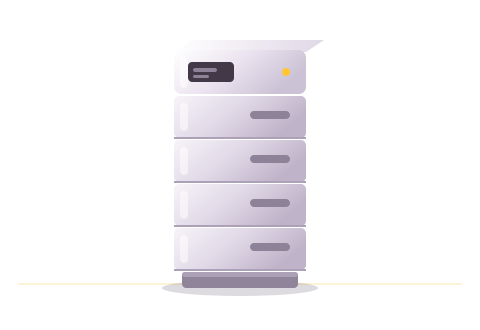
A stack, not a sealed box
Most home batteries are a sealed box of a fixed size. If you want more, you buy a second whole battery with a second set of electronics and a second position on the wall.
A Battery-Box is identical modules stacking on a common base with a control unit on top. The capacity is simply how many modules are in the stack: four HVS sizes and six HVM sizes, which is a fine enough grid to actually match a household’s evening load rather than round up to whatever product exists.
And it can be grown afterwards by adding modules to the tower you already have. For a household that is fairly sure it will electrify more over the next few years, that is a genuinely different proposition.
HVS or HVM, and it is not really about size
The two families overlap on capacity. What separates them is current, and current is what decides which inverter they suit.
Battery-Box Premium HVS
- Modules of 2.56 kWh, two to five a tower
- 5.12, 7.68, 10.24 or 12.8 kWh
- 25 A continuous, 50 A for three seconds
- 762 to 1461 mm tall, 91 to 205 kg
- Suits a conventional evening load behind a 3.6–6 kW hybrid
Battery-Box Premium HVM
- Modules of 2.76 kWh, three to eight a tower
- 8.28 up to 22.08 kWh
- 50 A continuous, 75 A for three seconds: double the HVS
- A full eight-module tower is over two metres and can exceed 300 kg
- The family to choose for a heat pump, car charging or a larger hybrid
Every size in both families
| Modules | HVS capacity | HVM capacity | Continuous current |
|---|---|---|---|
| 2 | 5.12 kWh | - | HVS 25 A |
| 3 | 7.68 kWh | 8.28 kWh | HVS 25 A / HVM 50 A |
| 4 | 10.24 kWh | 11.04 kWh | HVS 25 A / HVM 50 A |
| 5 | 12.8 kWh | 13.8 kWh | HVS 25 A / HVM 50 A |
| 6 | - | 16.56 kWh | HVM 50 A |
| 7 | - | 19.32 kWh | HVM 50 A |
| 8 | - | 22.08 kWh | HVM 50 A |
Two to five modules for a single tower; four to eight where towers are paralleled. An HVS tower cannot be paralleled with an HVM tower. They are different families and they do not mix.
Three towers, and what that reaches
Up to three systems can be paralleled within one family.
Very few domestic properties get past the first line. The reason to know the rest is that it tells you the design has somewhere to go.
What to ask before you sign anything
Which generation the quotation is for
BYD split the current HVS and HVM documentation by control unit: the current generation is BCU 2.0, and BYD themselves label the previous control units as legacy. The cells and capacities are unchanged. Ask which generation a quotation is for, including ours, because a price that looks keen may be clearing old stock.
What the tower will weigh, and what it is standing on
A full eight-module HVM tower is over two metres and can exceed 300 kg on a footprint of 585 by 298 mm. On a suspended timber floor that is a question we actually answer rather than assume.
Whether the design has room to grow
The point of a stack is that it grows. If there is any prospect of adding modules, the position needs headroom and the containment needs to allow for a taller tower. We note that on the handover pack rather than leave the next installer to discover it.
Which inverter it sits behind
A Battery-Box is a battery, not a system. This is the part of the specification that most often goes wrong.
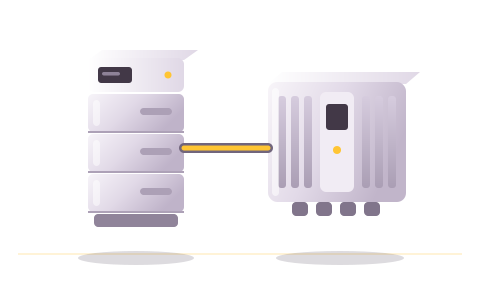
BYD do not make the inverter
BYD publish a compatible inverter list and revise it regularly. It is specific, and shorter than people assume: named model families rather than a blanket brand approval.
Two absences are worth stating plainly, because both manufacturers appear elsewhere on this site. SolarEdge and SolaX hybrid inverters are not on the HVS and HVM list. SolarEdge does appear on the list for the low-voltage LVS range instead, with a note that multiple towers are not supported there.
We check the proposed inverter against the current published list before quoting, and we tell you which document and revision we checked. It is a two-minute job that avoids a commissioning day where the two halves of a system will not speak to each other.
On the list, by named model family
Brands, not blanket approval: each appears with specific model families, and the list is revised. We check the current revision against the exact model before quoting.
If someone has quoted you a BYD HVS tower behind a SolarEdge or SolaX inverter, that is worth a question before you sign.
Why it is the one we prefer in a garage
Battery-Box uses lithium iron phosphate cells, which BYD manufacture themselves rather than buying in. BYD are one of very few battery companies who make their own cells, which is why the same chemistry turns up in their buses and cars.
LFP has a lower energy density than the nickel-based chemistries, which is why a Battery-Box is physically larger for the same kilowatt hours. In a domestic installation that is a trade worth making: LFP is the more thermally stable chemistry, it tolerates being held at a high state of charge better, and it is generally the one installers choose for something that will live in a garage for fifteen years.
What it is certified to
Siting a tower
The specification, in full
FAQs
Can I start small and add capacity later? +
Yes, that is the point of the design. Modules are added to the existing tower rather than buying a second battery. Tell us at survey if you expect to.
Will it work with the inverter I already have? +
It is a question with a definite answer rather than a guess. BYD publish a compatible inverter list and we check yours against the current revision before quoting. SolarEdge and SolaX hybrid inverters are not on the HVS and HVM list.
What is the difference between HVS and HVM? +
Current, mainly. HVS delivers 25 A continuous and runs 5.12 to 12.8 kWh; HVM delivers 50 A and runs 8.28 to 22.08 kWh. If the battery has to support a heat pump or car charging, HVM is usually right even at a capacity HVS could reach.
Is lithium iron phosphate safer? +
It is the more thermally stable of the common lithium chemistries, which is why most installers now prefer it for domestic storage. It is not a licence to site a battery badly.
Can I mix an HVS tower and an HVM tower? +
No. Up to three towers of the same family can be paralleled, 38.4 kWh for HVS or 66.2 kWh for HVM, but the two families do not mix.
Can it go outside? +
The rating allows it. We usually recommend a garage or utility room in this climate, because performance at the cold end of that range is not what it is at twenty degrees.
What is the warranty? +
BYD state ten years, with conditions. We go through the terms at quotation rather than leaving you to find them, and register the warranty in your name at commissioning.
How does it compare with an all-in-one battery? +
It is modular where an all-in-one is fixed, and it separates the battery from the inverter, which gives more choice on both. The trade-off is specifying two things that have to match, which is exactly why the compatibility list matters.
Which generation will I get? +
The current documentation is the BCU 2.0 generation; BYD label the previous control units as legacy. Ask any quotation which one it is for, including ours.
Ask us what capacity actually earns its keep
Send your annual kWh figure and your tariff, and we will size a Battery-Box against your evening load and tell you which inverter it should sit behind.
