How big a solar battery do you need?
The right battery size comes from how much electricity you use in the evening and overnight, not from a round number. A typical home in Britain uses about 2,500 kWh of electricity a year, roughly 7 kWh a day, and a battery in the region of your daily use is a sensible starting point. Your solar panels, your tariff and any plans for a heat pump or electric car then move that figure up or down.
Where to start
Size it to your evening, not to a round number
During the day, your solar panels power the house directly. The battery earns its keep after the sun goes down, covering the evening meal, the television, the washing machine and the lights. So the question is how much you use from late afternoon to the next morning, and how much spare solar you have to fill the battery.
We size it against your evening load and your tariff, not against a round number.
A simple way to estimate your size
- Find your yearly electricity use on a recent bill or in your supplier's app.
- Divide it by 365 to get your average daily use.
- Think about how much of that you use in the evening and overnight. For most families it is more than half.
- Allow for anything you are planning: a heat pump adds a lot of electricity use, and a bigger family uses more.
- If you are on a tariff with cheap overnight electricity, the battery can also fill up overnight and cover the expensive early evening.
Battery size by household
As a starting point, solar company Sunsave suggests matching the battery to your daily use. These are their rough figures, before your own survey:
- 2,000 kWh a year
- About 5 to 6 kWh of battery
- 2,700 kWh a year
- About 7 to 8 kWh of battery
- 3,400 kWh a year
- About 9 to 10 kWh of battery
- 6,800 kWh a year, with a heat pump
- About 18 to 19 kWh of battery
If you want the battery to keep part of the house running in a power cut, Sunsave suggests allowing 20% to 40% more.
Solar, your tariff, or both
Filling it from your panels
- Stores spare solar instead of sending it to the grid for a lower price
- Works best from spring to autumn, when there is more spare solar
- Free electricity once the system is paid for
Filling it on a cheap overnight tariff
- Tops the battery up in winter, when solar is low
- Covers the expensive early evening hours
- Needs a time of use tariff from your supplier
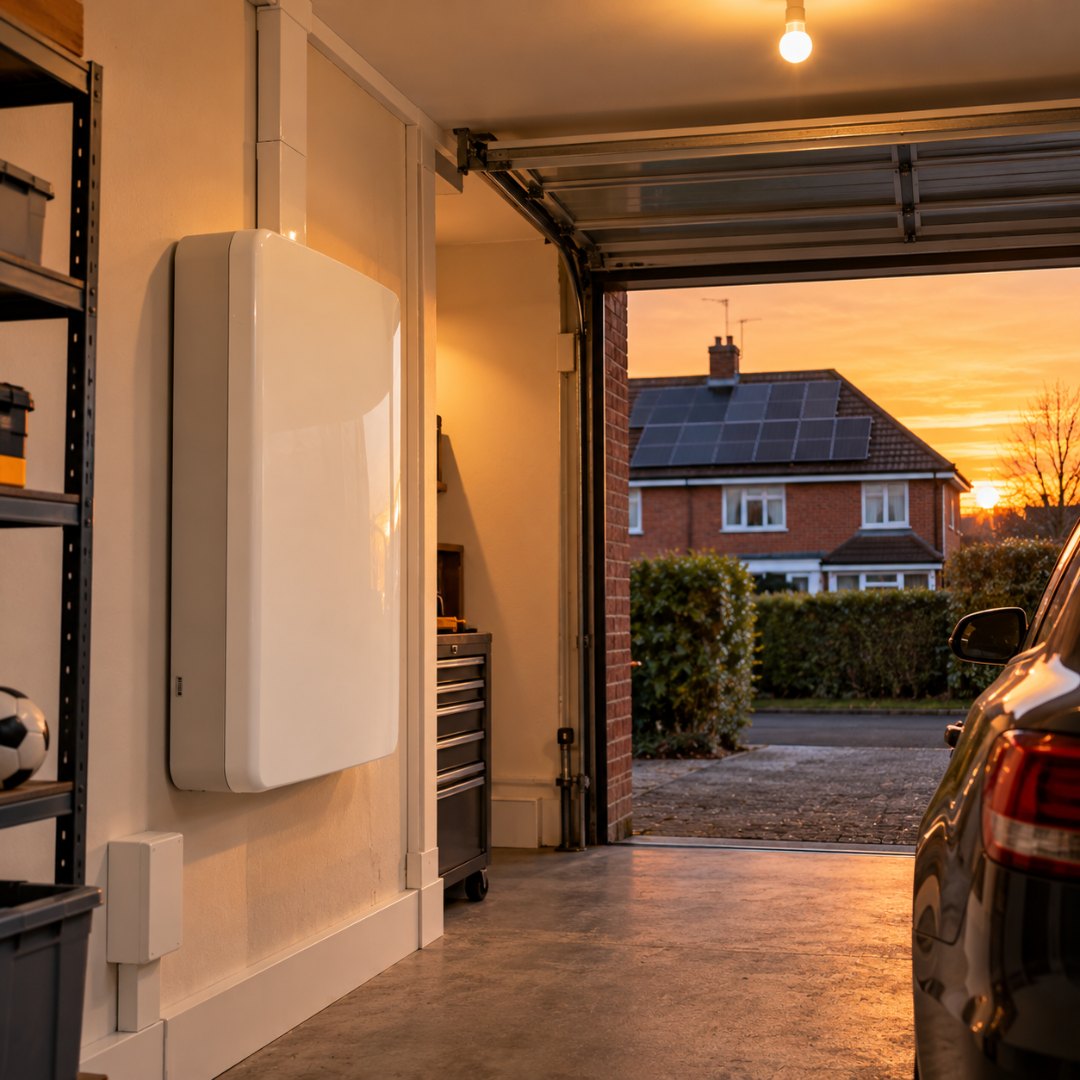
The Tesla Powerwall 3
ZenithNord is a Tesla Powerwall Certified Installer, a status held by Qualis Energy Limited, which trades as ZenithNord. The Powerwall 3 is one battery we fit:
13.5 kWh
Enough for the evening and overnight use of many family homes.
11.04 kW continuous
It can run several large appliances at the same time.
Solar inverter included
It takes up to 20 kW of solar panels across three separate inputs, so there is no separate inverter box.
Add more later
Up to three expansion units can be added to one Powerwall 3. It carries Tesla's 10 year warranty.
Two common sizing mistakes
Start with ZenithNord's usage review and we will size a battery to your evenings and your tariff, in a fixed written proposal.
Get a Solar QuoteQuestions people ask
What size battery does a typical UK home need?
A typical home uses about 2,500 kWh of electricity a year, around 7 kWh a day, so a battery somewhere around that size is a sensible starting point. Your evening use, your solar panels and your tariff decide the final size.
Is one Tesla Powerwall 3 enough?
For many family homes, yes. One Powerwall 3 stores 13.5 kWh. Homes with a heat pump, or with high evening use, may need more, and up to three expansion units can be added to one Powerwall 3.
Can I add a battery to solar panels I already have?
Usually, yes. The battery is sized from your use and from how much spare solar your existing panels make. A survey checks where the battery would go and how it connects.
Does a battery work in winter?
Yes. There is less spare solar in winter, but on a time of use tariff the battery can fill up with cheaper overnight electricity and cover the expensive early evening.
Will a battery power my home in a power cut?
Some can, if they are set up for backup. If that matters to you, say so at the survey, because it affects the size and how the battery is wired in.
Where these facts come from
- Ofgem: medium electricity typical domestic consumption value of 2,500 kWh a year from 1 July 2026checked 2026-10-24
- Tesla Powerwall 3 datasheet (UK distributor copy): 13.5 kWh, 11.04 kW continuous, 20 kW DC solar input, 3 MPPTs, up to 3 expansion units per…checked 2026-10-24
- Sunsave, what size battery: match battery to daily use; household table; add 20 to 40% for backup; arbitrage example of about £146 a year fo…checked 2026-10-24
- ZenithNord homepage: batteries sized against evening load and tariff; Powerwall 3 at 13.5 kWh with built in inverter; Tesla Powerwall Certif…checked 2026-10-24
